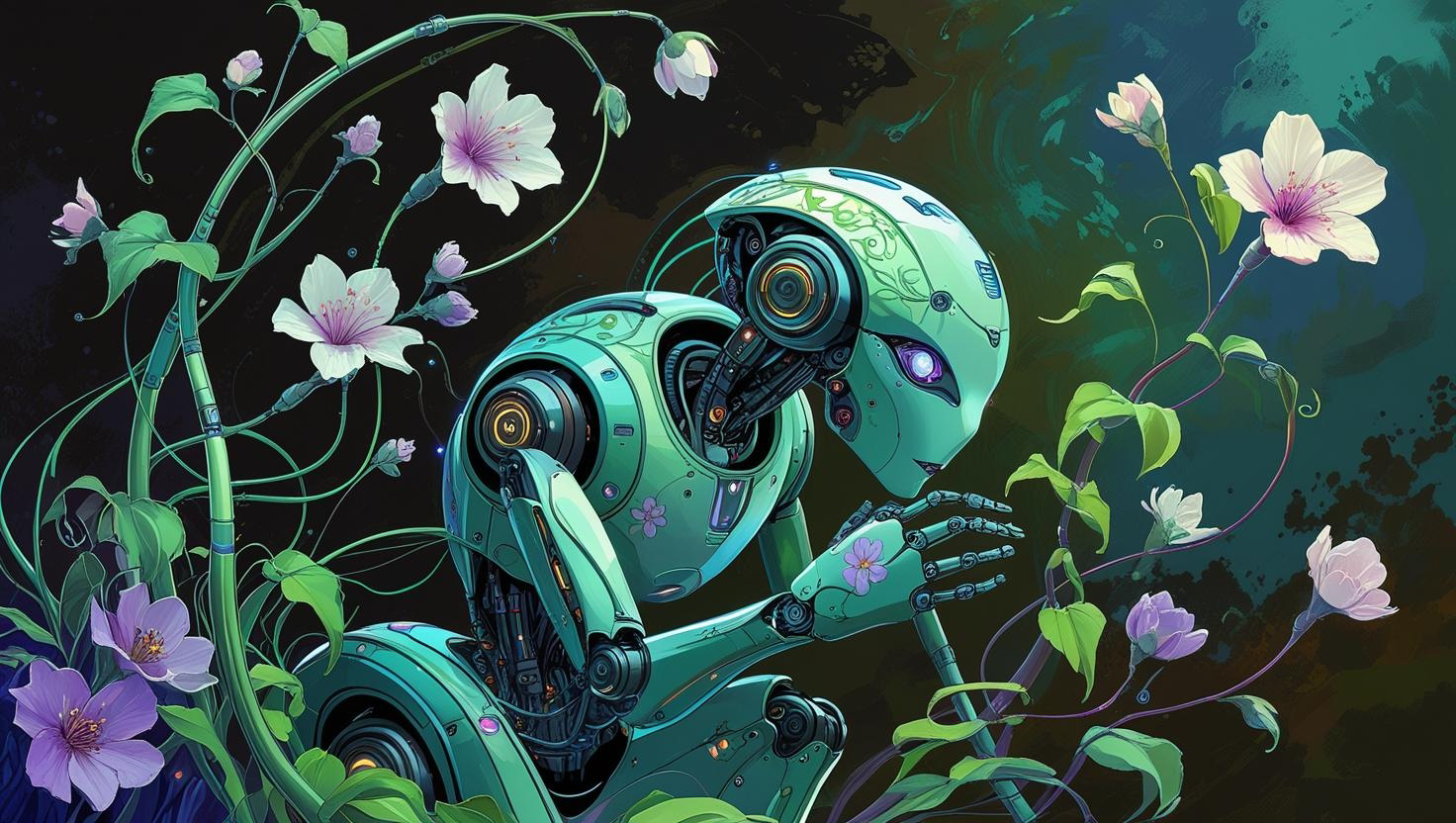
Imagine a garden growing on a rooftop in Brooklyn, silently texting the clouds: “Hey, we’re thirsty!” Or a robot adjusting the light levels for lettuce like it’s crafting the perfect selfie. Welcome to urban farming powered by AI—where data meets dirt, and Mother Nature gets a motherboard.
Urban farming isn’t just a hip trend for city dwellers with a green thumb—it’s a revolution that’s redefining how we grow food in concrete jungles. As cities expand and traditional farmland dwindles, the need for sustainable, local food production has never been more urgent. But urban farming comes with its own set of challenges: limited space, resource constraints, and the unpredictable whims of nature in an urban setting. That’s where artificial intelligence (AI) steps in, blending the nurturing essence of gardening with the precision of technology to create a future where every city corner could bloom with fresh produce.
Why Urban Farming Needs a Tech Makeover
The global population is increasingly urban—over 56% of people live in cities as of 2025, a number projected to rise to 68% by 2050, according to the United Nations. Meanwhile, arable land is shrinking due to climate change, deforestation, and urban sprawl. This creates a perfect storm: more mouths to feed, less space to grow food, and a pressing need to reduce the carbon footprint of transporting food over long distances. Urban farming offers a solution by bringing food production closer to consumers, but it’s not without hurdles.
Space is the most obvious challenge—rooftops, vacant lots, and even warehouse corners are often the only options for urban farmers. Then there’s resource efficiency: water, energy, and nutrients must be used sparingly in a city environment where waste can quickly become a problem. And let’s not forget the anxiety of keeping plants alive in less-than-ideal conditions—too little light, too much heat, or a sudden pest invasion can spell disaster for a fledgling crop of basil or kale. Traditional farming methods often fall short in these scenarios, relying on guesswork and manual labor that doesn’t scale in a city setting.
This is where AI comes in, acting as a high-tech partner to urban farmers. By leveraging data, machine learning, and automation, AI addresses these challenges head-on, making urban farming not just viable but thriving. It’s a marriage of the intuitive and the intelligent, where the nurturing spirit of gardening meets the analytical power of technology.
How AI Is Changing the (Urban) Landscape
AI isn’t just a buzzword in urban farming—it’s a game-changer that’s transforming how we grow, manage, and distribute food in cities. Here’s a deeper look at how AI is reshaping the urban farming landscape:
 Vertical Farms with Vision
Vertical farming—stacking crops in layers to maximize space—has become a hallmark of urban agriculture. Companies like AeroFarms and Plenty are leading the charge, using AI to create controlled environments that feel more like a sci-fi lab than a traditional farm. In their New Jersey facilities, AeroFarms grows leafy greens in towering stacks under LED lights, with AI systems monitoring every variable in real-time. Light intensity, temperature, humidity, and nutrient levels are adjusted dynamically to ensure each plant gets exactly what it needs to thrive.
For example, AeroFarms uses machine vision to “see” how plants are growing. Cameras capture images of the crops, and AI analyzes them to detect signs of stress, disease, or nutrient deficiency. If a tray of arugula is looking a little yellow, the system might tweak the nutrient mix or increase blue light exposure to boost photosynthesis. This precision allows AeroFarms to produce up to 390 times more food per square foot than traditional farming, all while using 95% less water. It’s like having a plant nanny that never sleeps, ensuring every leaf gets the VIP treatment.
 Water Wisdom
Water is a precious resource in cities, and urban farms can’t afford to waste a drop. AI-powered smart irrigation systems take the guesswork out of watering by analyzing a dizzying array of data points: soil moisture levels, weather forecasts, humidity, and even the specific water needs of each plant species. Some systems, like those developed by Netafim, use machine learning to predict “plant mood swings”—detecting when a plant is stressed or overwatered based on subtle changes in its growth patterns.
For instance, a rooftop farm in Brooklyn might use an AI irrigation system to water its tomatoes only when the soil moisture drops below a certain threshold, factoring in a forecasted rain shower later that day. This not only conserves water but also prevents overwatering, which can lead to root rot or nutrient leaching. In a city where every drop counts, AI ensures that water is used efficiently, keeping urban farms sustainable and cost-effective.
 Data-Driven Dirt
Not all plants thrive in every environment, and urban settings can be particularly tricky with their microclimates and limited soil quality. AI steps in with data-driven insights to match crops to their ideal conditions. Machine learning algorithms analyze historical data—weather patterns, soil composition, and past crop yields—to predict which plants will do best in a given urban farm.
Take Bowery Farming, another leader in urban agriculture. Their AI platform, BoweryOS, uses data to recommend crops for specific locations. In a Manhattan warehouse, the system might determine that microgreens will yield better than spinach due to the available light and temperature conditions. It’s like a matchmaking service for vegetables, ensuring each plant finds its perfect home. This
predictive power reduces trial-and-error, saving urban farmers time, money, and heartbreak.
 The Local Food Loop
One of the biggest promises of urban farming is reducing food miles—the distance food travels from farm to plate—which in turn cuts carbon emissions. But getting fresh produce from a rooftop farm to a local market or restaurant isn’t always straightforward. AI-powered logistics platforms are streamlining this process, creating what’s known as the “local food loop.”
For example, AI can optimize delivery routes by analyzing traffic patterns, weather conditions, and demand forecasts. A platform like Farm-ng uses AI to connect urban farms with nearby buyers, ensuring that a batch of freshly harvested kale from a Brooklyn rooftop reaches a local café before it wilts. This efficiency not only keeps food fresher but also reduces the environmental impact of transportation. It’s farm-to-fork, optimized for the 21st century.
 Robots in the Rows
Beyond monitoring and logistics, AI is also bringing robots into the urban farming equation. Robotic systems can plant seeds, prune plants, and even harvest crops with precision. In Japan, Spread Co. operates a fully automated vertical farm where robots handle 90% of the labor, from seeding to packaging. These robots use AI to adjust their actions based on the growth stage of the plants—gentle handling for delicate lettuce seedlings, firmer grips for mature heads ready for harvest.
In an urban setting, where labor costs can be high, these robots reduce expenses and allow farms to scale. They also work tirelessly, ensuring that a midnight growth spurt doesn’t go unnoticed. It’s a glimpse into a future where robots and plants collaborate under the watchful eye of AI.
The Feminine Side of the Future
Urban farming powered by AI isn’t just about efficiency—it’s about harmony. There’s a nurturing, intuitive quality to this technology that feels distinctly feminine. AI systems care for plants with a level of attention that mirrors a gardener’s love, but they do it with the precision of a scientist. It’s the perfect blend of the soft and the sharp, the nurturing and the nerdy.
This fusion also reflects a broader shift in tech: it’s becoming more inclusive, more empathetic, and yes, a little more fabulous. Urban farming with AI isn’t just functional—it’s a celebration of what technology can do when it works in tandem with nature. It’s a space where innovation feels personal, where growing food in a city becomes an act of care for both people and the planet.
Challenges and the Road Ahead
While AI is transforming urban farming, it’s not without challenges. The technology can be expensive to implement—vertical farms often require significant upfront investment in sensors, lights, and software. For small-scale urban farmers, this can be a barrier, though companies like Farm-ng are working on affordable, modular solutions. Energy consumption is another concern, as indoor farms rely heavily on electricity for lighting and climate control. Advances in renewable energy, such as solar-powered farms, could help mitigate this issue.
There’s also the question of accessibility. AI-driven urban farming needs to be democratized so that communities in food deserts—urban areas with limited access to fresh produce—can benefit. Initiatives like community-supported agriculture (CSA) programs and partnerships with local governments can help bring these technologies to underserved areas, ensuring that the future of food is equitable as well as innovative.
Call to Action
The future of food is growing in our cities, and you can be part of it. Want to support urban farming? Start small: explore your local urban farm scene, visit a rooftop garden, or even grow your own basil with a smart sensor (you can find affordable ones on Amazon for under $20). If you’re feeling inspired, share this post on social media to spread the word about AI-powered urban farming—let’s turn every city corner into a blooming cloud. Together, we can make food production more sustainable, local, and tech-savvy.
- AI Urban Farming
- Vertical Farming
- Smart Irrigation
- Data-Driven Agriculture
- Local Food Loop
- AI Meets Nature
- Sustainable Tech