Monday, June 30, 2025

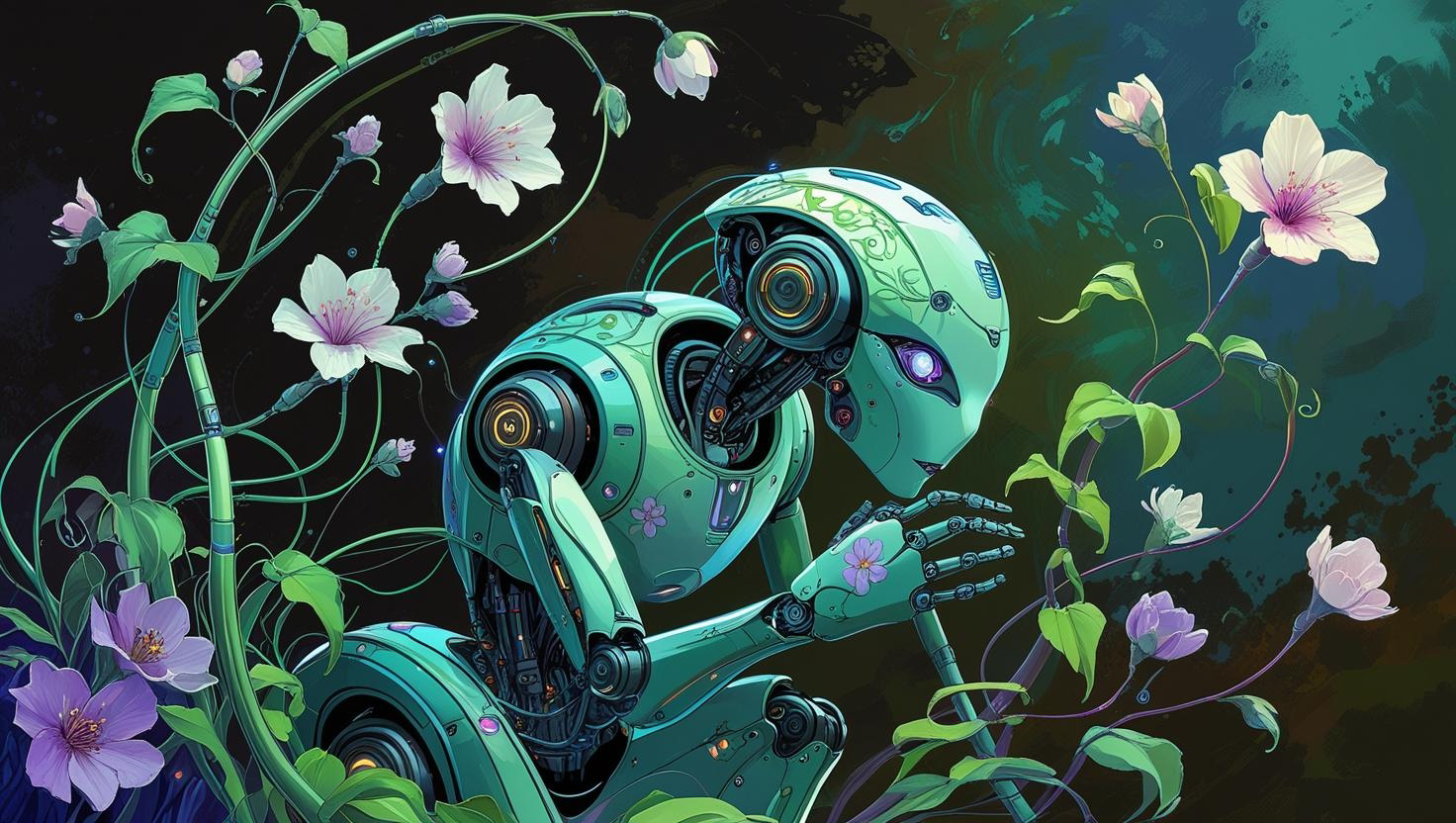
Botanical Bots: How AI Is Learning to Speak Plant


Imagine whispering sweet nothings to your houseplant—and it actually whispering back. Okay, maybe not in words, but what if your pothos could text you when it’s thirsty or your tomato plant could ping you with a leaf emoji mid-aphid attack?

Welcome to the wonderfully weird world of AI-plant communication, where algorithms are finally decoding the green gossip happening all around us.


---

Can Plants Talk?

In their own leafy language, yes. Plants don’t have vocal cords or emoji keyboards (tragic), but they communicate constantly—through chemical signals, electrical impulses, and even subtle vibrations.

When a caterpillar nibbles on a leaf, the plant doesn't just shrug—it sends out distress chemicals to nearby kin. Some release scents that attract wasps to take care of the munching menace. Others change color or stiffen their cells like tiny botanical bouncers.

For centuries, this leafy language has been too subtle for humans. But AI? It’s all ears. (Or rather, sensors.)


---

Listening to Leaves: AI Gets Fluent in Flora

With the help of sensors, signal processing, and machine learning, researchers are now tuning into plant life like never before. Here’s how:

Electrical Signals: Plants send bioelectrical signals (think planty brainwaves). AI models trained on these patterns can detect stress, dehydration, nutrient needs—or even the plant’s mood (okay, “physiological state,” but still).

Chemical Whispers: Advanced olfactory sensors paired with AI can detect the specific compounds plants emit when under attack or in need. It's like Alexa for your garden… except she’s really into chlorophyll.

Acoustic Vibes: Yep, plants make sounds. Tiny pops and clicks, especially under drought stress. AI-enhanced microphones are now learning to translate those into actionable alerts.


---

So… Are We Building Plant Whisperers?

Pretty much! Devices like plant health monitors, AI-powered greenhouses, and even wearables for trees are rolling out. Farmers can now use AI dashboards to monitor entire crop fields’ "feelings" in real time—adjusting water, light, or nutrients accordingly.

And it's not just agriculture. Environmental scientists are experimenting with AI-plant networks in rewilding zones—networks where the plants themselves help manage the ecosystem by communicating their needs and conditions via sensors and software.


---

Beyond Green Thumbs: Why It Matters

This isn’t just futuristic flower talk—it’s a leap toward smarter, more responsive ecosystems. With AI as a translator, we can:

Reduce overwatering (hello, climate impact!)

Detect diseases before visible symptoms appear

Monitor forest health in real time

Even prevent crop failures with predictive alerts


It’s not just about thriving houseplants—it’s about global food security, biodiversity, and climate resilience.


---

🌱 Call to Action:

Next time you water your plant, thank it—it’s probably already trying to tell you something.
Share this article with your favorite plant parent or AI enthusiast and let them know: the future of communication is green, leafy, and a little bit weird. 🌿💬


---

📌 Tags:

Plant AI, Smart Gardening, Bioacoustics, Digital Nature, Green Tech, Conscious Innovation, Sustainable Future, Tech x Nature, Feminine Future, Petal and Pixel

Monday, June 23, 2025

🌾 “What If AI Didn’t Exist?” (A Love Letter to the Robots Saving Our Garden Butts) By Petal and Pixel – human, plant hugger, and definitely not an AI in disguise


Let’s play a little game called “What If AI Ghosted Us?”

Spoiler: It would be like trying to garden with oven mitts on… in the dark… while someone shouts,

 “GOOD LUCK, YOU GOT THIS!” from very far away.

🚫 No AI? No Bueno.

Imagine this: You want to start your dream eco garden at home. 

You’ve got your seeds, your questionable potting soil, and a hopeful sparkle in your eye. 

But there’s one teeny-tiny problem…

You have no idea what you’re doing.

And there’s no AI to help. Which means

🧩 1. You’d Be Googling Like It’s 1999

Instead of saying, “Hey ChatGPT, can I grow strawberries in a shoebox in Poland?”, you’d be typing things like:

  • “Strawberries DIY home??”

  • “Best dirt??”

  • “How 2 not kill plants plz help”

And Google, in its cold, non-human way, would give you 19 contradictory articles, 14 of which were written by robots anyway (ironic, isn’t it?).


🧭 2. You’d Have No Idea What to Plant or When

No AI weather predictions. No personalized planting calendars. Just you, a half-dead basil, and the vague memory of what your grandma did with onions.

You’d end up planting tomatoes in October and wondering why they just sit there looking confused.


🌱 3. You’d Kill a Lot of Plants

Without plant ID apps, you’d water a weed like it was your child and forget about your actual herb seedlings.


“Wait, that wasn’t oregano??”


No, sweetheart. 

That was moss. 

And it was judging you.


📉 4. Your Budget Would Spiral Faster Than Ivy on a Fence

Without AI suggesting cheap compost hacks or free tools in your area, you'd end up impulse-buying a $79 “automatic soil whisperer” from an Instagram ad.


It would arrive broken and speak only Danish.


😵 5. You’d Be Overwhelmed, Underwatering, and Probably Crying

No personalized reminders, no AI layout guides, no garden-planning templates. Just your brain and 7 browser tabs titled “best way to not murder a cucumber.”

Let’s be honest: You’d give up and go watch Netflix in a heartbeat.

So… What Would We Do?

Well, we’d figure it out. 

Eventually. 

Probably.

But it would take way more time, way more trial-and-error, and way more swearing at slugs.

And the beautiful thing is… we don’t have to.

🎉 Enter: AI. Our Dirt-Smart BFF.

AI doesn’t replace our love of gardening.
It just makes it easier to get started, stay inspired, and maybe actually harvest something.

It’s like having a fairy godmother, but instead of glass slippers, she gives you the perfect tomato-to-basil ratio and a watering schedule based on your zip code. Swoon.

🌿 In This House, We Love:

  • Tools that tell us when to water

  • Apps that ID our mystery houseplants

  • Robots that know the difference between sun and partial shade (because honestly, I do not)

  • Planning a whole dreamy eco garden without losing our minds


💡 Final Thought: The Future Is Green (and Slightly Robotic)

AI isn’t here to boss you around. It’s here to whisper helpful things like:


“Hey babe, don’t plant kale next to your beans.”


“Psst—those flowers need full sun.”


“I believe in you, and your compost smells... like progress.”

Without AI, eco gardening is still beautiful—but with AI?


It’s empowered, easy, and kind of futuristic in the coolest way possible.

🌸 TL;DR:

If AI didn’t exist, we’d still grow gardens.


But they’d be messier. More stressful. And probably filled with accidental poison ivy.

With AI? 

We get more joy, less confusion, and a little voice that reminds us…


“You got this, dirt queen.”

💌 Join the Petal & Pixel Garden Gang

Loved this post? 

Subscribe to Petal & Pixel for more earthy tech, budget-friendly eco garden tips, and laughs you can compost.


Let’s keep our thumbs green and our tech tools charged.


Tag your garden fails and wins: #PetalAndPixel 🌼


Monday, June 16, 2025

Threads of Thought: Environmental Science — The Limitations Without AI When Saving the Planet Feels Like Working in the Dark


Out in the wild, far from glowing screens and high-speed servers, environmental scientists are on a mission.

 They're knee-deep in riverbeds, tracking butterflies through thick brush, and scribbling notes in weather-worn field journals.

 It’s passionate work—but without AI?

 It’s like trying to find a trail in the fog. 

Slow. 

Uncertain.

 And full of missed turns.

Let’s follow a day in the life of a scientist—call her Dr. Maya.

She’s studying a forest that’s changing faster than anyone expected.

Trees are disappearing. 

The riverbanks are eroding. 

The air smells different. 

She knows something is off, but the tools in her hands feel outdated.

 Everything she observes must be written down. Every sample, catalogued by hand. Every trend, guessed from memory and spreadsheets.

No real-time data. 

No instant feedback. Just hope that the pieces will come together in time.


The Trouble with Too Much Data—and Too Few Hours Without AI, data collection in environmental science is painfully slow and incredibly manual. 

Scientists like Dr. Maya can spend weeks counting water bugs or measuring pollution levels, only to realise too late that the real issue was upstream all along. 

The information they collect often ends up buried in notebooks or scattered across systems that don’t talk to each other.

Even when the data is gathered, analysing it is like assembling a jigsaw puzzle with half the pieces turned upside down. Hours of effort lead to partial conclusions. By the time a trend is spotted—say, a species disappearing or a toxin increasing—months have passed. And in climate time, months matter.


Predictions? Not Without Power

One of the most vital roles AI plays is forecasting. Without it, we rely on instincts, outdated models, and sheer guesswork to anticipate how ecosystems will react to change. 

Will a drought trigger wildfires? Will melting snowpacks flood lowland areas? Without machine learning to crunch complex climate interactions, the answers remain fuzzy.

And when predictions are fuzzy, action is delayed. Policy moves more slowly.

 Communities stay uninformed. Restoration efforts fall short. It’s not that environmental scientists aren’t brilliant—they are—it’s that they’re being asked to solve tomorrow’s problems with yesterday’s tools.


What Could Be: A World With AI in Nature’s Corner

Now picture this: a drone flies above Dr. Maya’s forest, instantly scanning for tree health, soil moisture, and invasive species. AI processes thousands of satellite images to spot early signs of deforestation. A river sensor detects pollution levels in real time and sends a warning before fish are harmed. All of it coordinated, connected, and actionable—fast.

That’s the kind of support AI offers: speed, scale, and insight. It doesn’t replace human knowledge; it amplifies it. It turns data into direction. It gives us time back—time to fix, protect, and restore.


Let’s Get Nature and Tech Talking

Environmental science needs a boost. Not because it’s broken, but because it’s racing against the clock. AI can help tip the scales back in our favour.

So here’s what we do next:
🌱 Start the conversation. Share this post with friends who care.
🌲 Support tools that bring tech to the frontlines of nature.
💬 Drop a comment—what’s one natural place you’d fight to protect?

Together, let’s give Earth the tools it deserves. Not mittens and guesswork—but vision, clarity, and action. Right now, the planet’s calling. Let’s make sure we’re listening—with a little help from AI


.


Monday, June 9, 2025

Petal Profiles: Renewable Energy—The Inefficiencies Without AI AKA: When the Wind Blows… and We’re Not Ready for It


Hey there, sunshine seekers and future-fixers! 

Welcome back to Petal & Pixel, where technology meets the great outdoors—and they both look fabulous doing it. 🌿⚡

Today, we’re diving into the world of renewable energy—you know, the good stuff like solar panels, wind turbines, and the occasional sunbeam selfie. 

But here’s the twist: what happens if we try to power the planet without AI?

Spoiler alert: 

It’s like trying to catch the wind with a butterfly net—frustrating, messy, and not very efficient. 

But don’t worry, we’ve got ideas to make it better!


💨 Windy Guesswork: The Not-So-Breezy Problem

Picture a sprawling wind farm—those giant white turbines spinning majestically in the breeze. 

Sounds like a clean energy dream, right? 

Well... without AI, it’s more like a logistical nightmare on roller skates.

Predicting the wind is hard. 

Really hard.

Without AI crunching weather data, we’re left sticking a finger in the air and declaring, 

“Yep, definitely windy-ish!” Turbines might spin too slowly when the wind dips, or way too fast during a gust, leading to breakdowns. 

It’s like dancing with a partner who keeps changing the music mid-twirl—you’re always one step behind.


☁️ Solar Struggles: Here Comes the Sun… Maybe

Now let’s talk sunshine. 

Solar panels are awesome—until the clouds crash the party.


Without AI forecasting solar output, we have no idea when the sun’s taking a break.

 That means surprise power shortages and panicked scrambling. It’s like planning a perfect picnic... and forgetting an umbrella. Wet sandwiches, anyone?

And don’t even get us started on energy storage.

 Without AI, batteries hoard energy like toddlers with crayons—either too much in one place or not enough when you need it. 

It’s like eating all your Halloween candy on day one and wondering why you’re sad on November 2nd. 🍬😭


🏭 Dirty Backup = Dirty Air

Here’s the not-so-sunny side: when renewables fail to deliver (because we didn’t plan well), we fall back on the bad stuff—coal, gas, and pollution parties nobody wants an invite to.

And that’s a huge bummer. 

We’re trying to clean the planet, but without AI helping us use renewables smarter, we’re fumbling with tangled extension cords while the planet runs out of time. 

It’s like trying to vacuum your house with the cord unplugged—loud, exhausting, and totally useless.


🤖 Enter AI: Our Renewable Superpower

Now here’s where it gets exciting: AI can totally fix this.
It can:

  • 🌀 Predict wind patterns better than a weather witch

  • 🌞 Tell solar panels when to soak up sun like pros

  • 🔋 Manage energy storage like a caffeinated squirrel preparing for winter

AI takes the guesswork out and turns clean energy into clever energy. And when energy is clever, the planet gets happier, the air gets cleaner, and we all get to sleep at night knowing we’re doing it right.


🌍 Let’s Make Clean Energy Smarter

So, what can we do?
📣 Share this post and spread the solar-powered truth
🌱 Drop a comment with your favourite way to save energy—LED bulbs? Composting? Wearing socks instead of turning up the heat? We wanna hear it!
⚡ Subscribe to Petal & Pixel for more tech-and-nature love stories

Together, we can turn renewable energy from “meh” to magical—with a little help from our brainy AI friends.

Let’s light up the future, one pixel (and one petal) at a time.


Monday, June 2, 2025

AI Garden Notes: Climate Change—The Uncertainties Without AI AKA: Why We Shouldn’t Let a Magic 8 Ball Run the Planet


Hey there, Earth-huggers and future-fixers! 

Welcome back to Petal & Pixel, where we believe saving the planet should be smart, sassy, and slightly sparkly. 🌱✨

Today, we’re getting real about a not-so-fun-but-super-important topic: climate change.


And specifically, what happens if we don’t use AI to tackle it?

Spoiler: It’s like trying to plan your beach day with a weather app from 1996. 

Confusing, inaccurate, and probably full of pop-ups.


🌡️ Predicting Chaos... With Crayons

Imagine scientists hunched over old charts, scratching their heads and muttering things like,


“Is this heatwave normal?”


“Did the polar bears move again?”


“Is that a cloud or... smoke?”


Without AI, climate experts are forced to play detective with decades of data and a big ol’ stack of guesswork.

 It’s like trying to build IKEA furniture without the manual—or the Allen key.

And sometimes, big clues get missed—like massive storms forming on the horizon, or ice melting faster than your popsicle on a July sidewalk. 

Yikes.


📍 Planning, Schmlanning

Here’s the kicker: without AI, our plans to fix the planet are basically scribbled in crayon.

Want to plant trees?

Cool!

But where?


Need to build a wind farm? 

Awesome! 

But what if the wind is on vacation that day?

It’s like planning a picnic without checking the weather—you end up soggy, surrounded by ants, and wondering where it all went wrong.

Meanwhile, pollution is puffing along: factories, traffic, smoke stacks galore. 

Without AI watching in real time, we’re always reacting instead of preventing.
(Think: chasing a toddler after they’ve already painted the cat.)


🔍 Uncertainty = Missed Opportunities

Here’s the heartbreaker: when we don’t know what’s coming, we can’t protect the people who need it most.


Rising seas? 

We don’t know where.

Hotter summers?

 We don’t know how hot.


Food shortages? 

We can’t predict where they’ll hit hardest.

Without AI, we’re playing hide-and-seek with the future—only the future keeps changing the hiding spots. And we’re stuck using a tiny flashlight with half-dead batteries. Not ideal.


🦸 Enter: AI, Climate’s Super Sidekick

But hold up! There’s hope—and it comes with circuits.

AI can crunch data at lightning speed, predict weather patterns, track emissions, and tell us where to plant, build, and protect—all without breaking a sweat.

It’s like giving scientists a jetpack, a crystal ball, and a megaphone, all at once.

So instead of stumbling in the dark, we get clear roadmaps. 

Smarter decisions. 

Cleaner outcomes. 

And maybe, just maybe, a planet that isn’t constantly on fire.


🌿 Let’s Make the Future Less Mysterious

Feeling hopeful? We are, too.

Here’s what you can do:
💡 Share this post and tell your friends that tech and nature can be besties.
🌱 Drop a comment: What’s one thing you wish the planet could do better?
🛰️ Subscribe to Petal & Pixel for more tech-meets-Earth stories that don’t put you to sleep.

Together, we can turn the climate crisis into a climate comeback.

Let’s grow that greener, smarter, sassier tomorrow—one pixel (and one petal) at a time.


Popular Post

🌸When AI Tries to “Help” in the Garden (And Accidentally Invents a New Species)🌸 Home of the SCE™ Method, RISE Softly™ & C.A.L.M. RISE™ Elements

  A Petal & Pixel story about creativity, chaos, and why technology should never be left alone with your houseplants Let me tell you abo...